

Anton Guinea
Entrepreneur, Speaker, bestselling author, and founder of The Guinea Group of Companies. For over 15 years, Anton has helped leaders move their teams to become psychologically safe, physically safe and overall better versions of themselves.

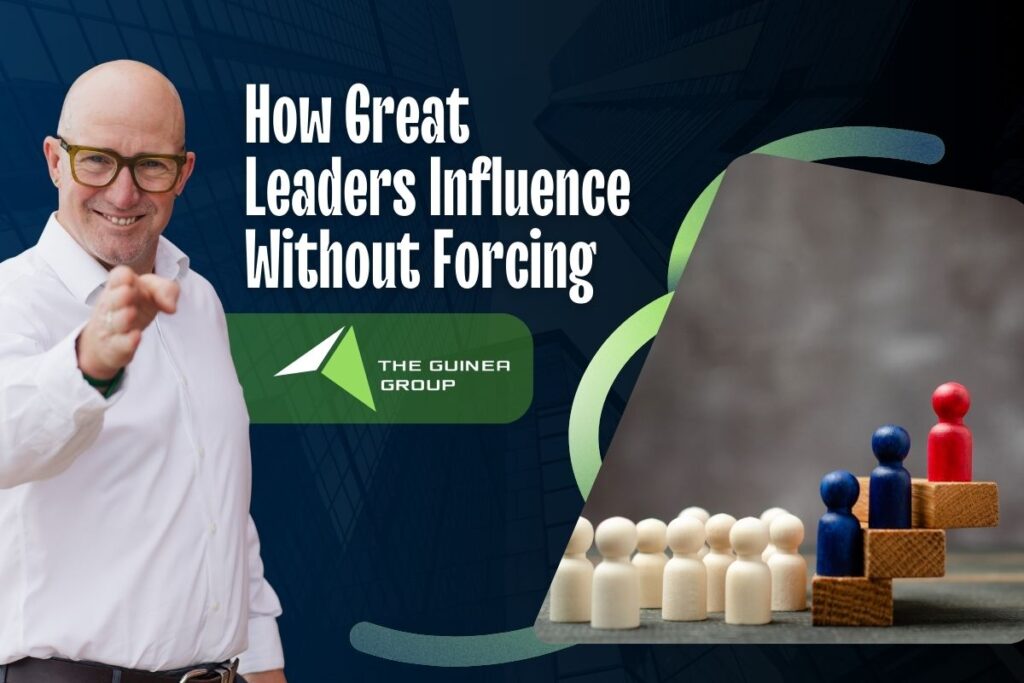
Have you ever noticed that the harder you push people, the more quietly they pull away?
You can’t force commitment. You can only earn it. The leaders who try to control every move might get short-term compliance, but they rarely get trust, care, or people who genuinely want to do their best work.
Influence is different. Influence lasts. And influence starts long before you ask anyone to follow you.
Why control feels tempting and why it keeps failing
I get why control feels safe. When pressure is on, deadlines are tight, and responsibility sits on your shoulders, it can feel easier to tell people exactly what to do. Be firm. Be clear. Be in charge.
I’ve done it myself.
The problem is that control works against how humans actually behave. When people feel managed, watched, or boxed in, they stop thinking. They stop speaking up. They do the minimum required to stay out of trouble.
Over time, that drains energy from teams.
I often see leaders confuse authority with influence. Authority comes with a title. Influence comes from how people experience you. And people experience leaders emotionally first, logically second.
This is where many leaders get stuck. They try to fix behaviour by applying more pressure. More rules. More consequences. Yet behaviour rarely shifts in a healthy way.
I’ve written before about how you can’t force behaviour, but you can influence it. That idea sits at the heart of how great leaders operate.
Influence grows when people feel safe
If there’s one thing I’ve learned since my own near-fatal workplace incident, it’s this. People don’t speak up, contribute, or challenge ideas unless they feel safe enough to do so.
Safety isn’t softness. Safety is what allows honesty.
When leaders create environments where people feel respected and heard, something shifts. Conversations improve. Mistakes surface earlier. Decisions get stronger.
This isn’t just opinion. There’s strong evidence showing that psychological safety improves team performance and decision-making. Harvard research into team dynamics highlights how safety supports learning, trust, and accountability. You can read research on psychological safety that reinforces this link clearly.
From my perspective, influence doesn’t come from being the loudest voice in the room. It comes from being the leader people feel comfortable telling the truth to.
That’s why building trust in leadership isn’t a nice-to-have. It’s the foundation.
Trust and respect change how people respond to you
I’ve noticed something consistent across teams that function well. Leaders who are trusted don’t need to repeat themselves. They don’t need to threaten consequences. People lean in instead of pushing back.
Trust grows through small, visible actions.
Keeping your word. Staying steady when things go wrong. Being fair when emotions are high.
Respect shows up in how you listen. How you respond when someone disagrees. How you handle mistakes.
When leaders act with respect, influence follows naturally. People don’t feel managed. They feel considered.
This connects directly to emotional regulation. Leaders who can stay calm under pressure create space for others to think clearly. I’ve shared my thinking around this in why emotional intelligence becomes a leader’s greatest asset.
When emotions are steady, influence feels quieter. Less forceful. More effective.
Leading without forcing still requires courage
Some people hear influence-based leadership and think it means being passive. It doesn’t.
Influence requires courage. It means holding boundaries without aggression. It means addressing issues early rather than letting frustration build. It means saying hard things with care instead of avoiding them.
I often tell leaders that forcing compliance is actually the easier path in the moment. Leading with influence takes more self-control.
It asks you to pause. To choose language carefully. To manage your own reactions first.
That’s one reason so many leaders struggle under pressure. The internal work matters as much as the external behaviour.
Australian work health and safety guidance also highlights the role leaders play in shaping psychosocial conditions at work. You can see how expectations are shifting through Safe Work Australia’s guidance on psychosocial hazards.
Influence and safety are deeply connected.
Speaking safely changes how influence shows up
One of the most powerful ways leaders influence without forcing is through language.
How you invite feedback. How you respond to dissent. How you ask for input when you don’t have all the answers.
I’ve watched leaders unintentionally shut down rooms with a single sentence. And I’ve watched others open up honest dialogue by slowing down and listening.
That’s why I’m so passionate about helping leaders build the skills to speak in ways that create trust rather than fear.
Programs like our speak safe workshop focus on practical language. Real conversations. Everyday moments where influence is either built or lost.
When people feel safe to speak, leaders don’t need to force alignment. Alignment grows through conversation.
Why this matters for Australian leaders right now
Australian workplaces are changing. Expectations around wellbeing, respect, and accountability are clearer than ever.
People are less willing to tolerate poor leadership behaviour. Silence costs organisations more than leaders realise.
Influence-based leadership isn’t about being popular. It’s about being effective without damaging people in the process.
That’s the kind of leadership that holds up under pressure.
It’s also the kind of leadership organisations reach out to me for when they want lasting change.
If you’re curious about how this approach could work inside your organisation, there are different ways we can explore it together. Some leaders start by attending workshops. Others bring this thinking into leadership days or team sessions.
If you’d like to have a conversation about what influence-based leadership could look like for your team, you can reach out through my contact page.
And if you’re looking for deeper work across your organisation, you can also explore how I support leaders through leadership programs and speaking engagements.
Influence isn’t about control.
It’s about who people choose to follow when no one is watching.
Please click the image below if you’d like to chat about what leadership means to you
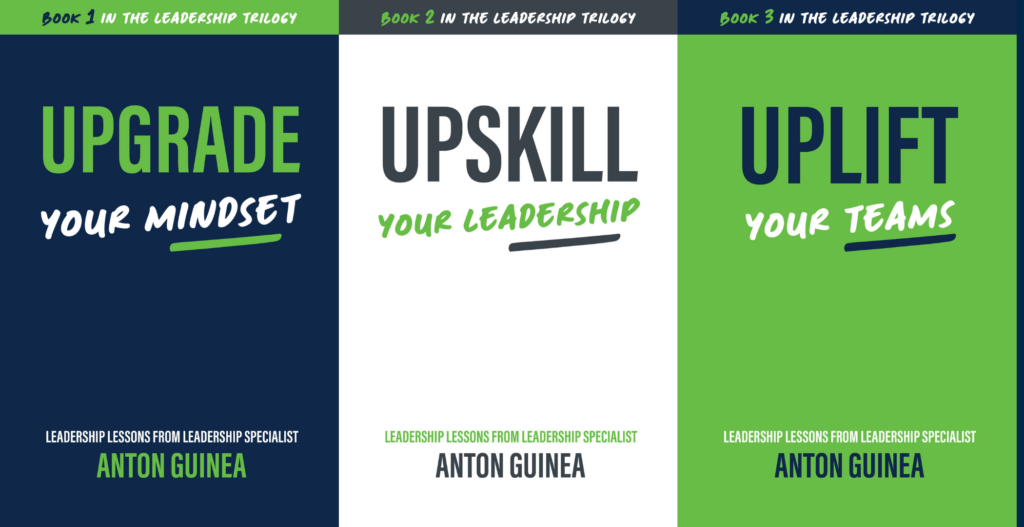
If you would like to learn more about Anton or The Guinea Group, please click here to book into Anton’s calendar, to:
UPGRADE your Mindset
UPSKILL your Leadership
UPLIFT your Teams