

Anton Guinea
Entrepreneur, Speaker, bestselling author, and founder of The Guinea Group of Companies. For over 15 years, Anton has helped leaders move their teams to become psychologically safe, physically safe and overall better versions of themselves.

Have you ever walked away from a conversation with a leader feeling smaller, quieter, or unsure of yourself and wondered why?
I’ve spent more than two decades working with leaders across Australia, and I can tell you this with certainty: damaging leadership influence rarely starts loud. It creeps in. It shows up in small behaviours that slowly shift how people think, speak, and act at work.
Most leaders I meet don’t wake up wanting to harm their teams. The problem is that influence works whether you’re conscious of it or not. And when leaders aren’t aware of the signals they’re sending, the impact can be far bigger than they realise.
This is what I look for when I’m trying to spot the early signs of damaging leadership influence. Not theory. Not buzzwords. Just real behaviours and real consequences.
The silence that fills the room
One of the first red flags I notice is silence.
Not the calm, focused kind. The uncomfortable kind. The kind where people stop asking questions. Stop offering ideas. Stop pushing back.
I’ve seen this play out time and time again. Leaders believe their teams are aligned, but what’s really happening is people have learned that speaking up comes with a cost.
Over time, this creates what I describe as a quiet shutdown. People still show up. They still do the work. But they stop caring in the way you actually want them to.
I’ve written before about the true cost of silence in the workplace, and it’s never just about missed ideas. Silence leads to errors going unchallenged. Risks staying hidden. Stress building quietly under the surface.
If your influence leads to people holding back, that’s not neutral. That’s damaging.
Control replaces curiosity
Another sign shows up in how leaders respond when things go wrong.
Damaging leadership influence often looks like control dressed up as accountability.
Every mistake becomes an interrogation. Every challenge turns into blame. Questions feel like threats instead of opportunities.
I’ve spoken with many leaders who believe being tough keeps standards high. What they don’t see is how quickly this shuts people down. Teams stop experimenting. They stop learning. They do just enough to stay out of trouble.
This is closely tied to emotional awareness. Leaders who struggle to regulate their own reactions often default to pressure, urgency, or anger. That pressure travels fast.
I’ve explored this in more depth in my piece on why emotional intelligence is a leader’s greatest asset. When leaders lose emotional control, teams feel it immediately.
And once fear becomes the motivator, influence turns corrosive.
Inconsistency becomes the norm
One of the most confusing experiences for any team is inconsistency from the person in charge.
Rules change depending on the day. Standards apply to some people and not others. Praise is unpredictable. Feedback feels random.
This isn’t just frustrating. It’s destabilising.
People spend more energy trying to read the leader than doing the work. They second-guess decisions. They hesitate. They wait.
In my experience, inconsistency is one of the fastest ways to erode trust. And once trust goes, influence weakens.
This is where damaging leadership influence often hides in plain sight. Nothing dramatic happens. But slowly, confidence drains out of the team.
I’ve seen leaders recover from this by learning how to have clearer, steadier conversations. If this resonates, there’s a strong connection to how leaders approach feedback, which I cover in how to give tough feedback without damaging morale.
Stress becomes normalised
There’s a dangerous belief that pressure is just part of the job.
Yes, work can be demanding. But when leaders treat constant stress as normal, teams start to burn.
I’ve worked with people who didn’t even realise how tense they were until they stepped out of the environment. That’s how normalised it had become.
Research into mental health at work makes it clear that sustained stress without psychological safety leads to long-term harm. Not just emotionally, but physically.
This is where leadership influence carries serious weight. Leaders set the emotional temperature. If urgency, pressure, and impatience dominate, people absorb it.
I’ve seen the opposite too. When leaders learn how to reduce unnecessary stress, performance often improves. There’s a reason I talk so much about safety. I’ve shared how this works in practice in breaking the stress cycle through psychological safety.
People stop challenging decisions
One of the clearest warning signs for me is when teams stop challenging the leader.
Healthy teams push back. They test ideas. They ask hard questions.
When that disappears, it’s rarely because everything is perfect. It’s usually because people don’t believe it’s safe to disagree.
This links closely to what psychologists call groupthink. And it’s risky.
There’s strong evidence from studies on team effectiveness, including Google’s work on psychological safety and performance, showing that teams perform better when people feel safe to challenge the status quo.
If your influence discourages disagreement, you’re limiting thinking. And that has consequences.
I’ve also written about this pattern in why speaking up matters more than ever.
What damaging influence costs organisations
Here’s the part leaders often underestimate.
Damaging leadership influence costs money.
Turnover increases. Absenteeism rises. Errors creep in. Reputation suffers.
I’ve seen organisations spend enormous amounts trying to fix problems that trace back to leadership behaviour. By the time they ask for help, the damage is already deep.
I’ve written directly about this in the consequences of poor leadership influence, because it’s not abstract. It’s measurable.
And the earlier these signs are recognised, the easier they are to address.
What leaders can do instead
The good news is that influence can be reshaped.
It starts with awareness. Real awareness. Not surface-level reflection.
Leaders need to ask themselves hard questions. How do people respond when I enter the room? Do they speak freely or carefully? Do they relax or tense?
This is where support matters.
I work with leaders through leadership speaking and coaching experiences to help them understand how their behaviour lands, not just what they intend.
Communication also plays a huge role. Influence is built through words, tone, and presence. That’s why we also run a presenting with influence workshop that helps leaders shape messages that build trust rather than fear.
If you’re noticing these signs in your organisation, or even in yourself, that awareness matters.
And if you want to talk it through, you can always reach out to start a conversation. These issues don’t fix themselves, but they can be addressed.
Leadership influence shapes how people feel long before it shows up in results. Paying attention early makes all the difference.
Please click the image below if you’d like to chat about what leadership means to you
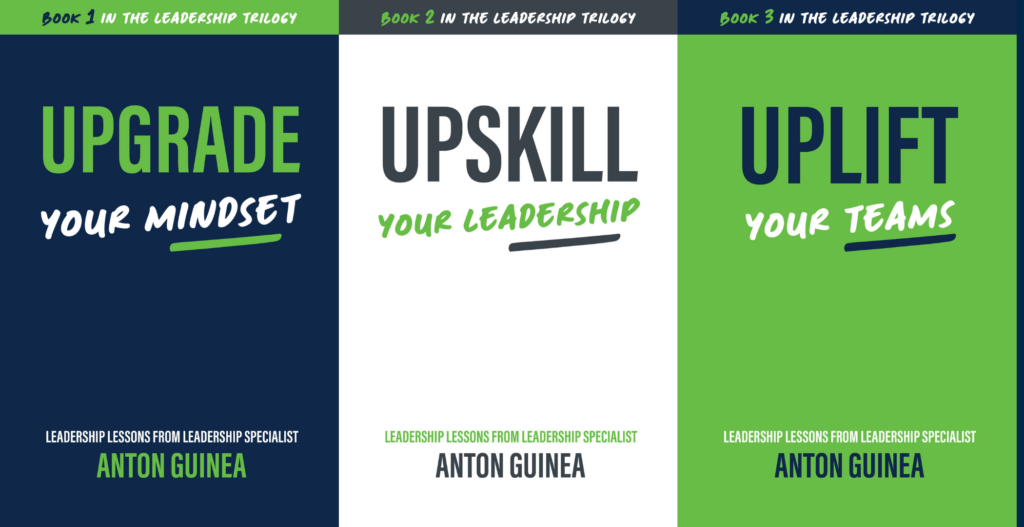
If you would like to learn more about Anton or The Guinea Group, please click here to book into Anton’s calendar, to:
UPGRADE your Mindset
UPSKILL your Leadership
UPLIFT your Teams