

Anton Guinea
Entrepreneur, Speaker, bestselling author, and founder of The Guinea Group of Companies. For over 15 years, Anton has helped leaders move their teams to become psychologically safe, physically safe and overall better versions of themselves.


What would shift in your team if you asked two more questions before you gave your next answer?
I’ve spent years helping leaders break the habit of constant telling. It feels quick. It feels clear. But it creates dependency, shuts down ideas, and makes people wait for you. What actually helps is a coaching mindset. Leading through questions that encourage people to think, choose, and own their path. When I stopped saying “do this” and started asking “what do you see?”, conversations got shorter and results got sharper. Confidence grew, rework dropped, and team members started bringing me solutions instead of problems.
Why asking works better than telling
Questions open space for thinking. If you ask “what options do you see?”, you hand over responsibility and give your team a chance to stretch. That builds ownership. In fact, there’s a harvard business review article showing that managers who take on the role of coach improve performance and decision-making. And as explained in this piece from mckinsey, psychological safety is key when people feel safe to speak up, they share better ideas and raise risks earlier.
I’ve also noticed that the leaders who grow most quickly are the ones who are curious. Curiosity makes you lean into a question rather than a directive. The time magazine discussion on curiosity backs this up, showing how asking better questions shapes better solutions.
What this looks like day to day
Here’s a simple swap that changes the tone of a chat:
- Telling: “Move the deadline and copy Tom on the update.”
- Asking: “Given our target, what’s the next step, and who needs to know?”
The first creates compliance. The second creates ownership. It also lets you hear how people think, which is gold for coaching. If you want to go deeper, here’s a useful list of powerful leadership questions that can change the flow of your meetings.
I always remind leaders that listening is the partner of asking. If you want to lift this skill, you’ll find practical strategies in this article on listening skills for leaders.
The habits that keep questions effective
Many leaders tell me they already ask questions. Then I hear them start with “have you tried…” — which is advice in disguise. Instead, keep to clean habits:
- Open and short: “What’s the real goal?” or “What’s in the way?” For more examples, this page of strategy questions is worth a look.
- Future focus: “If this worked out well, what did we do?”
- Challenge assumptions: “What are we assuming here?”
- Scale checks: “On a 1–10, where are we?” and “what would move it one point?”
If you’re building confidence in your delivery, you might also want to read my piece on effective speaking for leaders, because how you ask can be just as important as what you ask.
Creating safety with questions
It’s easy to say “speak up”. People only do that if they know it’s safe. Questions are a signal. Try “what am I missing?” or “what risk are we not saying out loud?” For more on the link between safety and performance, I’ve written about why safety is the base of high performance and also about how it drives team creativity. If you want something practical, the positive psychology guide to safety is a straightforward overview.
And if your team needs structured help to make conversations safe and constructive, I encourage you to explore our speak safe training program where we give leaders and teams the scripts and habits to keep tough conversations clear.
Simple scripts to borrow
Here are short questions I use each week that you can lift straight into your own practice:
- “What are we trying to achieve in one sentence?”
- “What’s the single biggest thing in the way?”
- “What’s your next step and by when?”
- “Where do you want my help?”
- “What will you update me on and by when?”
If you’d like more on how to shape conversations, this guide on meaningful leadership conversations will help keep things practical.
Make it safe for truth
Good questions land best when people believe they can tell you the truth. You build that through steady acts: thanking people for honesty, handling bad news calmly, and inviting voices that usually stay quiet. For more, read about how psychological safety reduces stress and this piece on how leaders build trust.
A week of practice
Try this five-day plan:
- Monday: Start each chat with “what’s the outcome we want?”
- Tuesday: Ask the quietest person first, “what’s your take?”
- Wednesday: Use a scale question. “On a 1–10, where are we?” Follow with “what moves it one point?”
- Thursday: Ask “what’s the smallest next step?”
- Friday: End with “what did we learn?” Capture one sentence.
It’s light, but it sticks. If you’d like more ideas, this reedition article on the power of asking questions is a handy reminder of why it matters.
Bring it to your whole team
If you’re ready to make asking the team a habit, I’d love to support you. You can book anton for workshops or keynotes, or explore the speak safe training program to build skills in safe, clear communication.
Pick one question, try it today, and see what changes. If you want support to make this the default in your team, reach out through the contact page.
Please click the image below if you’d like to chat about what leadership means to you
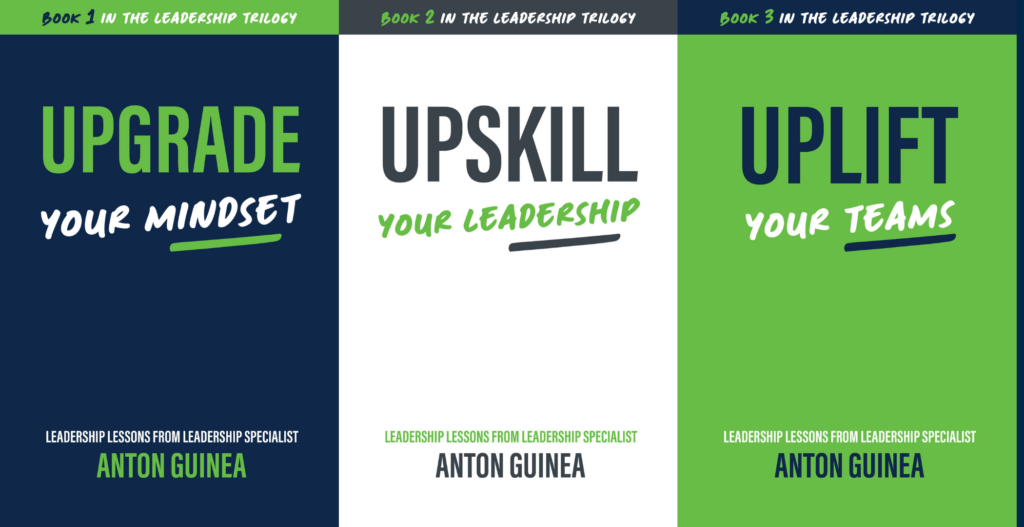
If you would like to learn more about Anton or The Guinea Group, please click here to book into Anton’s calendar, to:
UPGRADE your Mindset
UPSKILL your Leadership
UPLIFT your Teams