

Anton Guinea
Entrepreneur, Speaker, bestselling author, and founder of The Guinea Group of Companies. For over 15 years, Anton has helped leaders move their teams to become psychologically safe, physically safe and overall better versions of themselves.

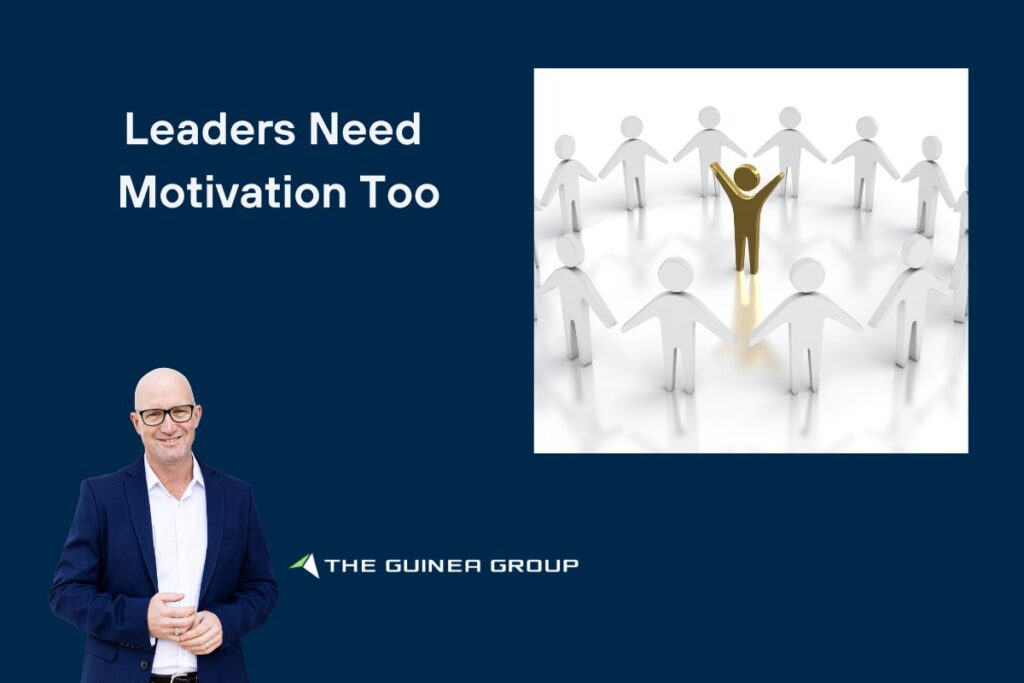
Have you ever noticed that the moment you stop feeling motivated as a leader is often the moment everyone else starts feeling it too?
Leaders are expected to be the steady ones. The calm ones. The ones who keep going no matter what. Yet very few people stop to ask a simple question: who is looking after the leader?
Leaders need motivation too. Not as a “nice to have”. Not as a reward. But as a core part of being able to lead others safely, consistently, and with care.
I’ve lived this myself. I’ve watched strong, capable leaders slowly lose their spark. Not because they didn’t care, but because they cared too much and never stopped to refuel.
Why leaders quietly lose motivation
Leadership can be lonely. There’s a lot you carry that never makes it into meetings or strategy decks.
You carry the emotional weight of decisions. You carry the pressure of performance. You carry the responsibility for people’s livelihoods. And over time, that weight adds up.
I often hear leaders say things like, “I just feel flat,” or “I don’t feel like myself anymore.” That loss of energy is rarely about skill or competence. It’s about emotional load.
I’ve written before about leaders losing motivation when emotional fatigue creeps in quietly. It doesn’t happen all at once. It happens when recovery keeps getting postponed.
Many leaders tell themselves they’ll rest later. After the next project. After the next crisis. After the next quarter. That “later” rarely comes.
Emotional wellbeing for leaders is still a blind spot
We talk a lot about wellbeing at work. Most of the time, that conversation is focused on employees.
Leaders are often left out.
I’ve had countless private conversations with senior leaders who admit they don’t feel safe saying they’re struggling. They worry it will undermine trust or confidence. So they hold it together on the outside and unravel on the inside.
That’s why I keep coming back to the idea that leadership starts internally. I’ve explored this in depth through listening to yourself and doing the inner work required for safer leadership.
If you can’t hear your own stress signals, you’ll miss them until your body or behaviour forces the issue.
Burnout doesn’t just affect the leader
When a leader is running empty, everyone feels it.
Energy drops. Patience shortens. Reactions become sharper. Conversations get avoided.
This is where things often start to slide culturally. Teams don’t stop speaking up because they don’t care. They stop because the emotional temperature feels unsafe.
I’ve seen how quickly pressure spreads through teams when leaders are overloaded. That’s why I often point leaders back to practical steps that reduce burnout before it takes hold. Prevention is always easier than repair.
Staying motivated means staying regulated
One of the strongest patterns I’ve noticed is this: leaders who stay motivated are leaders who know how to calm their nervous system.
They don’t suppress emotion. They manage it.
They notice when pressure is rising and take action early. Sometimes that action is a pause. Sometimes it’s a conversation. Sometimes it’s stepping back for perspective.
I’ve shared simple approaches before around staying calm when pressure builds, because emotional regulation protects motivation.
When your body feels safe, your thinking stays clear. When your thinking stays clear, leadership feels lighter.
Psychological safety recharges leaders too
We usually talk about psychological safety as something leaders create for others.
What we don’t say enough is that leaders need it just as much.
When leaders feel safe to speak honestly, ask for help, and admit limits, motivation returns. Energy follows safety.
This is why I keep connecting leadership wellbeing to culture. I’ve seen how reducing stress through safer conversations doesn’t just help teams. It helps leaders breathe again.
There’s also strong external research backing this up. Studies on workplace wellbeing and leadership stress published by the American Psychological Association reinforce how emotional load and role pressure affect decision-making and energy. One useful overview is this report on work, stress, and wellbeing.
Where structured support actually helps
Some leaders try to fix motivation alone. That rarely works for long.
What makes a difference is shared language, shared tools, and shared expectations.
This is where I see real change when organisations invest in structured psychological safety programs that support open, safe dialogue. Leaders stop carrying everything themselves. Teams step up. Pressure spreads more evenly. These programs aren’t about ticking boxes. They’re about giving leaders permission to be human while staying accountable.
Motivation grows when leaders stop pretending
One of the most honest insights I’ve had didn’t come from a book or a report. It came from listening to leaders share unfiltered experiences about feeling drained, isolated, and unsure whether they were allowed to say so.
When leaders drop the mask, motivation comes back.
Not because the work gets easier. But because the weight gets shared.
Support doesn’t weaken leadership
If there’s one belief I’d like to challenge, it’s this one: that strong leaders don’t need support.
They do.
And the leaders who seek it early stay effective far longer.
If you’re feeling flat, tired, or disconnected from why you lead, that’s not failure. That’s feedback.
If you want to talk about what support might look like for you or your organisation, you can reach out through a simple conversation with me here.
What I want leaders to remember
Leadership asks a lot. It always has.
But leaders are people first. If you want to lead others well, start by looking after the one person everyone depends on.
You.
And if this piece made you pause for even a moment, that pause might be exactly what your leadership needs right now.
Please click the image below if you’d like to chat about what leadership means to you
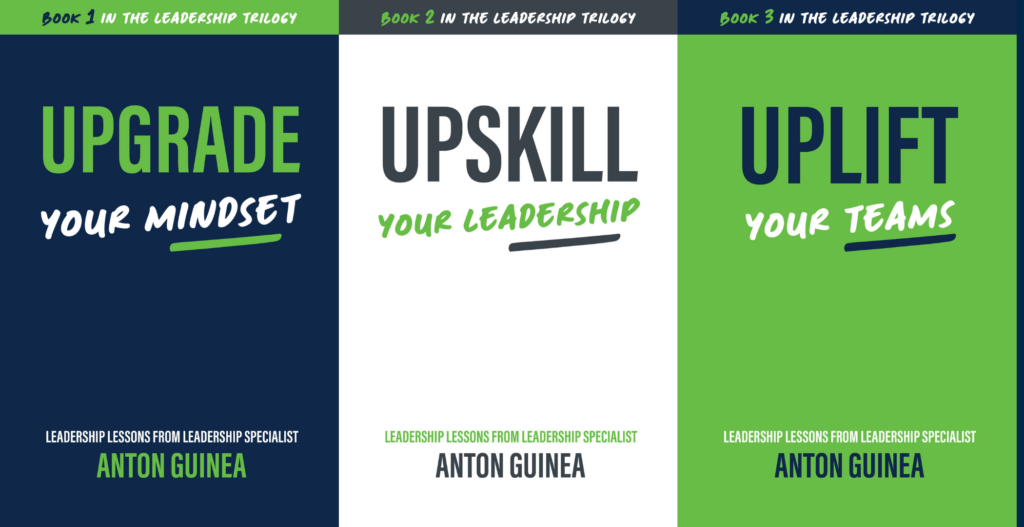
If you would like to learn more about Anton or The Guinea Group, please click here to book into Anton’s calendar, to:
UPGRADE your Mindset
UPSKILL your Leadership
UPLIFT your Teams