

Anton Guinea
Entrepreneur, Speaker, bestselling author, and founder of The Guinea Group of Companies. For over 15 years, Anton has helped leaders move their teams to become psychologically safe, physically safe and overall better versions of themselves.
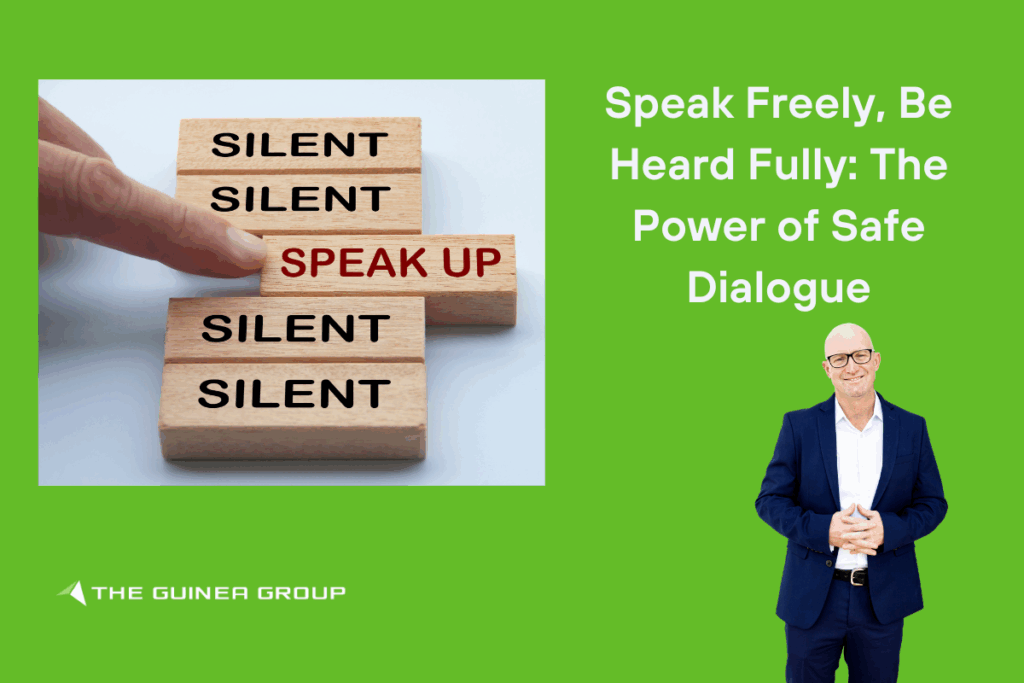
Have you ever walked out of a meeting thinking, “I wish I’d said what was really on my mind”?
I’ve been there myself. As someone who spends his days helping leaders create safer workplaces, I know that the cost of silence is huge. A team can look organised and busy on the surface, but if people don’t feel safe to speak freely, problems fester and ideas stay hidden. Over the years, and through plenty of honest conversations with leaders and team members, I’ve come to see that creating space for real dialogue is one of the most practical things a leader can do.
What safe dialogue really means
For me, safe dialogue isn’t about endless meetings or everyone agreeing. It’s about a culture where people can share what they truly think without fear of being shut down. I often say that a team’s success isn’t measured by how quiet the room is, but by how comfortable people are to speak up. Research from Harvard Business Review shows that psychological safety is the single biggest factor in high-performing teams. I’ve seen it play out again and again in Australian workplaces – when people feel safe, they bring their best thinking to the table.
That’s one of the reasons I created the SPEAK SAFE workshop. It’s built to help leaders and teams practice the kind of conversations where every voice matters and every concern is heard. It’s hands-on, practical, and it shifts how people talk to each other at work.
The hidden cost of staying quiet
It’s easy to underestimate the damage that silence does. I’ve met leaders who thought that fewer complaints meant things were going well, only to discover deeper issues when staff finally spoke out. Silence can drain morale and block creative thinking. An APA study found that teams without psychological safety are more stressed and far less collaborative. I’ve seen this first-hand in businesses where employees felt unheard – performance dipped and trust eroded until someone broke the cycle.
That’s why I talk about breaking the silence as a leadership responsibility. Creating an environment where people can say what they think isn’t optional; it’s what keeps teams healthy. You can read more about this in breaking the stress cycle and how psychological safety transforms workplaces, where I share stories from Australian organisations that turned things around by making conversation safe again.
Making people feel safe to speak
I often think back to an online discussion I read where someone said the best bosses they’d ever had were the ones who “listened without an agenda”. That stuck with me. It’s the kind of insight I’ve applied in my own leadership and in workshops. Leaders who listen to understand rather than waiting for their turn to talk set the tone for everyone else.
There’s strong evidence to support this too. A systematic review of psychological safety research highlights how trust and consistent listening lower anxiety and increase team contribution. In practice, that might mean starting meetings by inviting quieter team members to share, or setting agreements that no idea will be mocked. These are small changes, but they send a loud message.
I go deeper into these ideas in the mark of a great leader making others feel safe to speak, which explores how simple behaviours like acknowledging effort and curiosity can reshape the way a team communicates.
Why leaders must go first
Creating safe dialogue starts with leaders being willing to show some vulnerability themselves. I often tell the story of my own near-fatal workplace accident. It forced me to rethink how I lead and how I listen. When I share that experience, it shows my team that it’s okay to speak about tough things. People follow what you do far more than what you say.
There’s a helpful insight in recent research on psychological safety that matches what I’ve seen. Teams pick up subtle cues about whether it’s safe to contribute from the way leaders react to ideas, feedback, and mistakes. A raised eyebrow or a dismissive comment can close people down for months. On the other hand, a thoughtful question can open a floodgate of constructive ideas.
I’ve written about this culture of trust in the trust dividend and how safe conversations strengthen relationships, where I explain how trust grows every time a leader responds with curiosity instead of judgement.
Practical steps to build safe conversations
For leaders asking “Where do I start?”, I always say begin with small daily habits:
- Open meetings by setting the expectation that all opinions are welcome.
- Pause and summarise what you hear to show you’ve understood.
- Address interruptions so quieter voices aren’t drowned out.
- Follow up privately with those who hesitate to speak in a group.
These steps are simple but consistent practice is what makes them work. A helpful resource here is this review on psychological safety and team outcomes, which shows that small, steady efforts matter more than grand gestures.
I also encourage leaders to invest in structured learning. Joining a speak safe leadership training session is one way to practice these conversations in a supported environment. I’ve seen teams leave with new language and confidence that changes the way they talk the very next day.
Keep the conversation going
Safe dialogue is never a single event. It’s a culture that grows with every meeting, every one-on-one chat, every decision to listen. If you’re curious about deepening this approach in your own workplace, you can book me to work with your team or get in touch for a chat about what’s possible.
When teams learn to speak freely and be heard fully, everything changes: trust rises, problems are solved faster, and people genuinely enjoy working together. That’s the future of leadership I believe in, and it starts with one brave conversation at a time.
Please click the image below if you’d like to chat about what leadership means to you
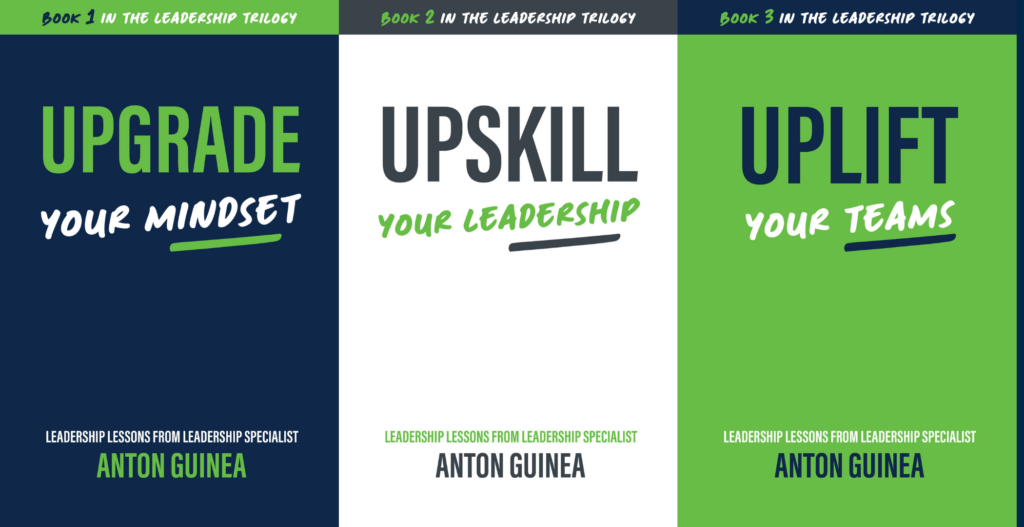
If you would like to learn more about Anton or The Guinea Group, please click here to book into Anton’s calendar, to:
UPGRADE your Mindset
UPSKILL your Leadership
UPLIFT your Teams